
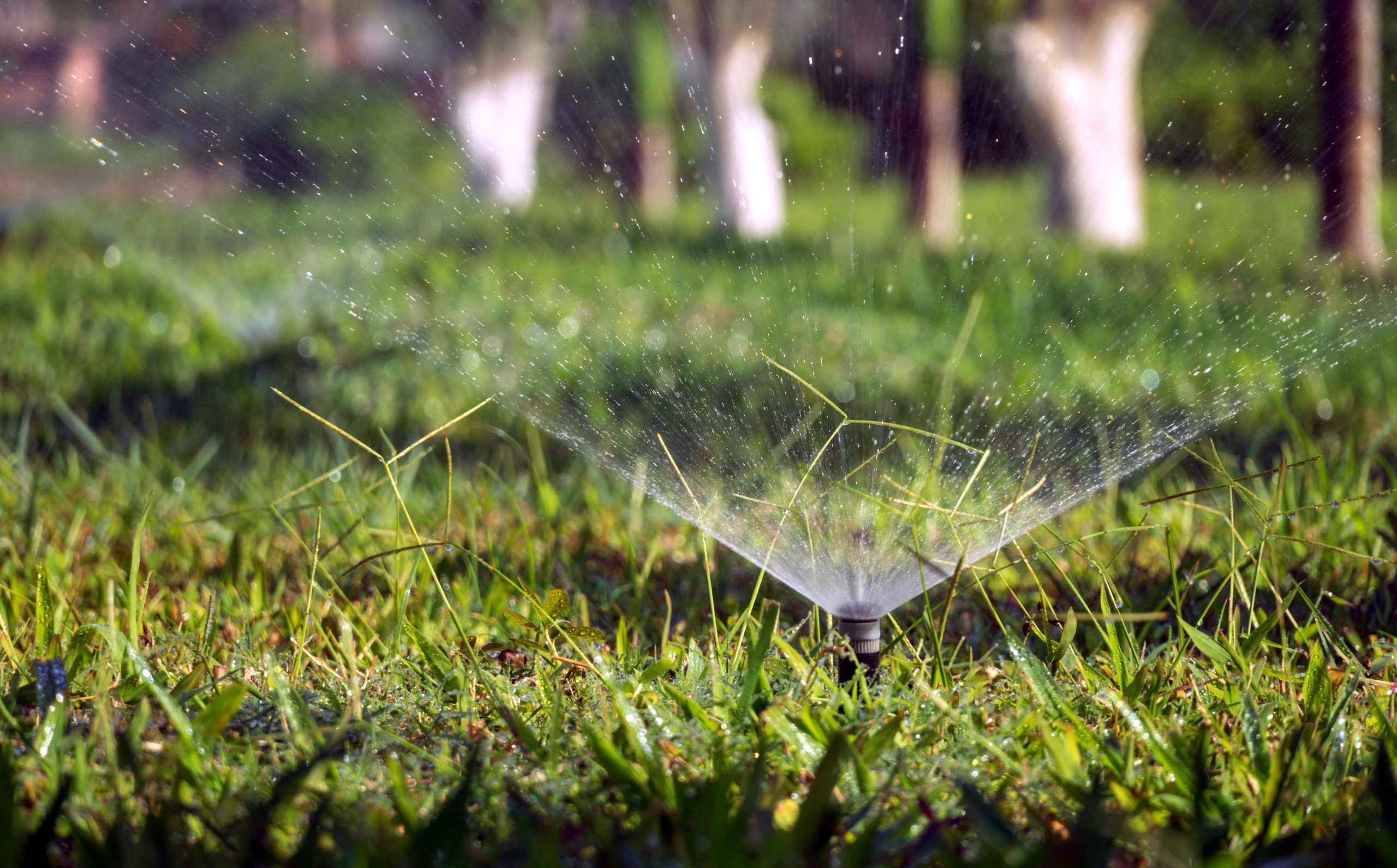
Most commercial property managers assume that if the irrigation system runs on schedule and nothing looks obviously dry, the plants are healthy. While that is a reasonable assumption, it is incorrect more often than one might think.
Overwatering is one of the most common and most expensive mistakes made on commercial landscapes throughout York County. A good commercial landscaping company will tell you that too much water causes just as much damage as too little, sometimes more, because the symptoms are slower to show up and easier to misread. By the time a property owner notices something is wrong, the root system may already be compromised.
The following sections explore the biological impact of overwatering on commercial plant material, how to recognize symptoms before costs escalate, and what a properly managed irrigation program looks like on a professional site.
The Biology Behind Overwatering Damage
While plants require water, they also need oxygen at the root zone, which roots absorb from air pockets in the soil. When soil remains saturated for extended periods, these air pockets fill with water, causing roots to suffocate. Consequently, the plant responds by wilting, yellowing, dropping leaves, and eventually dying.
Ironically, symptoms like wilting and yellowing appear almost identical to drought stress. Property managers seeing a struggling shrub often increase irrigation, inadvertently exacerbating the issue. This cycle continues until the plant fails, frequently without the root cause ever being identified.
According to Penn State Extension, root oxygen deprivation from waterlogged soil is one of the leading non-obvious causes of landscape plant decline in the Mid-Atlantic region. They note that the physical damage to roots from prolonged saturation can be irreversible even after soil conditions improve, meaning plants that were overwatered for an extended period often don’t recover even when watering is corrected.
Why York County Soils Make This Worse
Many York County sites have clay or silty soils, and compacted commercial sites drain slowly. Setting an irrigation timer in April, when temperatures are cool and evaporation is low, without adjusting it through June creates a recipe for chronic root zone saturation.
We see this pattern on commercial properties around Dover, Spring Grove, and along the Route 30 commercial corridor regularly. The irrigation was installed correctly. It just never got calibrated to the actual conditions of the site.
What Overwatering Looks Like in a Commercial Landscape
Some of these signs are easy to spot. Others take a trained eye. Either way, knowing what to look for can save you a significant amount in plant replacement and irrigation costs.
Visible Symptoms on Plant Material
• Yellowing leaves on otherwise healthy-looking plants, especially when it appears across multiple species in the same bed
• Soft, mushy stems at or near the soil line on shrubs and perennials
• Premature leaf drop in late spring or summer that isn’t related to pest activity or disease
• New growth that looks pale, weak, or smaller than expected
• Fungal growth at the base of plants or on the soil surface in irrigated beds
Site-Level Signs That Are Easy to Overlook
• Moss or algae growth on soil surfaces between plants in irrigated areas, indicating chronically wet conditions
• Turf that stays spongy underfoot well after rainfall has stopped
• Irrigation heads running during or immediately after rain, a sign that the system isn’t responding to actual soil moisture
• Persistent wet spots in beds that don’t have obvious drainage problems
If you’re seeing any combination of these on a commercial property, the irrigation schedule is the first place to look, not the last.
How Commercial Irrigation Systems Drift Out of Calibration
Irrigation systems rarely fail instantly; rather, they drift out of calibration. A system properly configured at installation can become a chronic overwatering problem within a single growing season if it is not adjusted for changing environmental conditions.
Spring startup is a frequent source of these issues. Systems are often activated when temperatures are mild and plants are emerging from dormancy. If run times remain static as the season progresses into July, they may deliver more water than the soil can absorb. Furthermore, zone overlap, where turf and shrub bed zones intersect, can result in certain areas receiving double the necessary water.
Smart Controllers Help, But They’re Not Automatic Fixes
Weather-based and soil-moisture-sensor controllers can reduce overwatering significantly on commercial sites, but only when they’re programmed correctly and checked regularly. A smart controller with outdated zone settings or a failed sensor isn’t protecting your plant material. It’s just adding a layer of false confidence.
The Irrigation Association recommends annual audits of commercial irrigation systems to assess distribution uniformity, catch heads, and controller programming. On commercial properties in York County, we’d add to that: mid-season checks after the first extended hot stretch of summer, because that’s when the gap between programmed run times and actual plant needs tends to be widest.
The Cost Equation: The Hidden Financial Impact of Overwatering
While a high water bill is the most immediate consequence, the long-term costs of plant replacement are far more substantial. On a mid-size commercial property, a noticeable decline and plant losses is a reasonable potential impact from chronic overwatering over a growing season. Replacing mature shrubs at a commercial scale typically costs about $50 to several hundred dollars per plant, before labor, depending on size and species. Furthermore, these gaps in the landscape can negatively affect how a property is perceived by tenants and customers during the regrowth period.
Fungal diseases significantly compound these financial losses. Pathogens such as Phytophthora root rot and Pythium blight on turf thrive in chronically saturated conditions. Attempting to treat these diseases without first correcting the underlying irrigation schedule results in recurring, inefficient expenses that drain your maintenance budget.
What a Properly Managed Irrigation Program Looks Like
Good irrigation management on a commercial site requires attention through the season, not a set-it-and-forget-it approach. Run times need to be calibrated to current evapotranspiration rates, not a fixed schedule. Zones should be separated by plant type and sun exposure. Rain shutoff sensors need to actually work. And mid-season audits catch head performance problems before they cause plant loss. Someone also needs to know the difference between drought stress and overwatering symptoms, because treating one like the other makes it worse.
At Strathmeyer, commercial landscape maintenance includes irrigation monitoring as part of the regular site visits rather than as a separate line item. If something’s going the wrong direction, we catch it before it becomes a replacement cost.
Evaluate Your Irrigation Performance Today
If your commercial property in York County has plant material that’s been struggling despite regular watering, or if you haven’t had your irrigation system audited since installation, it’s worth a conversation. Overwatering problems don’t resolve on their own, and the longer they run, the more damage accumulates.
Call Strathmeyer Landscape at (717) 292-6660 to schedule a site visit. We’re based in Dover, PA, and we work with commercial property owners, GCs, and construction managers throughout York County and the surrounding Mid-Atlantic region. Replacing a season’s worth of dead plant material takes a lot longer.
Frequently Asked Questions
How can a commercial landscaping company tell if a property is being overwatered?
Trained landscaping crews look at plant symptom patterns, soil moisture levels in irrigated zones, irrigation head coverage, and run time schedules relative to current evapotranspiration rates. Yellowing foliage across multiple species in the same bed, soft stems near the soil line, and fungal growth on the soil surface are reliable early indicators that a zone is getting more water than it needs.
Does overwatering cause the same damage as underwatering?
In terms of outcome, yes. Both can kill plant material. The mechanism is different: underwatering causes dehydration and cell death, while overwatering causes root oxygen deprivation and makes plants vulnerable to root rot pathogens. The tricky part is that early symptoms of both look similar, which is why overwatering often goes undiagnosed or gets made worse by adding more water.
How often should commercial irrigation systems be audited?
At minimum, once a year at spring startup. A mid-season check after the first sustained heat period is also valuable, particularly on sites with mixed plant types or complex zone configurations. The Irrigation Association recommends formal distribution uniformity audits for commercial systems to catch coverage gaps and head performance issues before they cause plant loss.
What types of plants are most vulnerable to overwatering on commercial sites in York County?
Evergreen shrubs like boxwood and arborvitae are particularly sensitive to root saturation and often decline slowly before showing obvious symptoms. Many ornamental grasses, though drought-tolerant once established, can develop crown rot in chronically wet soils. Newly installed plant material of any species is more vulnerable than established plants because root systems haven’t developed the depth to access better-drained soil layers.
Can overwatered plants recover?
It depends on how long the saturation lasted and whether root rot has set in. Plants caught early, before significant root death, can recover if irrigation is corrected and soil drainage is adequate. Plants that have been overwatered for a full season or more with visible root rot often don’t recover even after conditions improve. This is why early detection matters more than the fix.
How does a commercial landscaping company adjust irrigation for seasonal changes?
Responsible irrigation management means adjusting run times and frequencies as evapotranspiration rates change through the season. Spring and fall typically require less water than summer. Weather-based controllers can automate some of this, but they need to be programmed correctly and checked regularly. Manual adjustments are often still necessary, particularly after extended dry or wet stretches.
How do I get a commercial irrigation assessment in York County, PA?
Contact Strathmeyer Landscape at (717) 292-6660 to schedule a site visit. The team assesses irrigation performance as part of commercial landscape maintenance services throughout York County and the surrounding region. If overwatering or calibration issues are contributing to plant health problems on your property, a site walk is the right first step.
About the Author
The Strathmeyer Landscape Team | Strathmeyer Landscape
Dover, PA | Commercial Landscaping Installation, Maintenance & Design Specialists
The Strathmeyer Landscape Team provides full-service commercial landscaping solutions throughout York County and the Mid-Atlantic region. Headquartered in Dover, Pennsylvania and founded in 1996, the company is locally owned and managed with a strong focus on delivering dependable landscape installation, maintenance, and design services. Their work is tailored to meet the needs of each property, whether it is an industrial site requiring low-maintenance solutions or a retail space designed to enhance curb appeal and customer experience.
Strathmeyer Landscape takes pride in being a single-source partner for all landscape needs, supporting construction managers, general contractors, and property owners with better coordination and consistent results. With experience across landscape construction, maintenance, and design, the team is committed to delivering practical, high-quality solutions built on reliability, local expertise, and long-term value.